
FAR Case Study (Poultry) Jim Uprichard, Trouw Nutrition
Sue Whittington


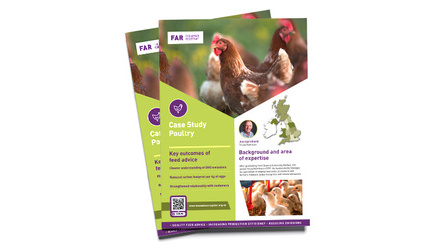
Key outcomes of feed advice
-
Clearer understanding of greenhouse gas (GHG) emissions
-
Reduced carbon footprint per kg of eggs
-
Strengthened relationship with retail customers
Background and area of expertise
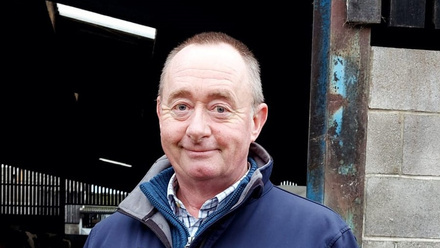
Jim graduated from Queen’s University Belfast in 1985 and joined Trouw Nutrition in 1991 as a commercial nutritionist.
Over the past three years, he has taken on the role of Sustainability Manager.
In this role, he works with feed mills, processors and farmers to calculate carbon footprints and develop mitigation strategies across different species.
Give an example of how your feed advice has made a measurable difference
In recent years, the egg industry has been asked by its retail customers to provide Life Cycle Assessments (LCAs) for greenhouse gas (GHG) emissions, measured as carbon dioxide equivalents (CO₂e), for their eggs. The industry has also been required to identify ways to reduce these emissions.
Working closely with key egg packers, feed compounders and the Trouw poultry nutrition team, Jim calculated a baseline for GHG emissions from egg production. This included both the carbon footprint of the feed and emissions generated on-farm.
By improving understanding of the feed raw material supply chain and the nutritional impact of these materials, the team was able to reduce the carbon footprint per kilogram of eggs. This was achieved by lowering the use of high CO₂e raw materials, reducing the overall crude protein content of diets, and improving feed conversion efficiency (FCE). Importantly, these changes were delivered while maintaining bird health and productivity. This gave both egg processors and farmers confidence that reducing GHG emissions could be achieved without compromising profitability.
What difference does FAR make to you and your customers?
The Feed Adviser Register (FAR) provides reassurance to different parts of the agri-food industry that the advice given by feed advisers is supported by a recognised qualification.
As research and development continue to introduce new approaches and solutions, the FAR programme helps ensure that feed advisers remain up to date.
This, in turn, gives confidence to customers and the wider food industry that the supply chain can support farmers in meeting environmental, social and economic sustainability challenges, going beyond basic feeding recommendations.
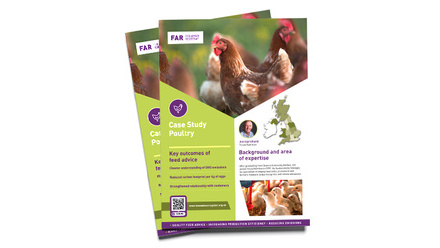
Click Below to Download a Copy of the Case Study
Become a FAR case study
AIC Services is looking for more Feed Adviser Register (FAR) advisers to contribute to a series of case studies, showcasing the valuable work advisers do and the difference they make to farm businesses.
If you are a FAR-registered adviser and would like to share a project, highlight the support you provide, or demonstrate the positive impact of your advice, please email AIC Communications Manager Wendy Ford (wendy.ford@agindustries.org.uk) to register your interest.