
Blog: Protecting Choice - Why Certified Seed Matters for the Future of UK Crop Production
How do we ensure UK growers continue to have access to varieties developed for UK conditions, UK markets and future farming challenges? The Agricultural Industries Confederation's (AIC) Head of Combinable Crops and Seed, Rose Riby, examines the role a strong certified seed sector plays in protecting innovation, resilience and grower choice for the future of UK crop production.
Every crop starts with a seed.
It sounds simple, but in a sector facing rising costs, unpredictable weather, tighter environmental expectations and fewer crop protection options, the importance of that seed has never been greater.
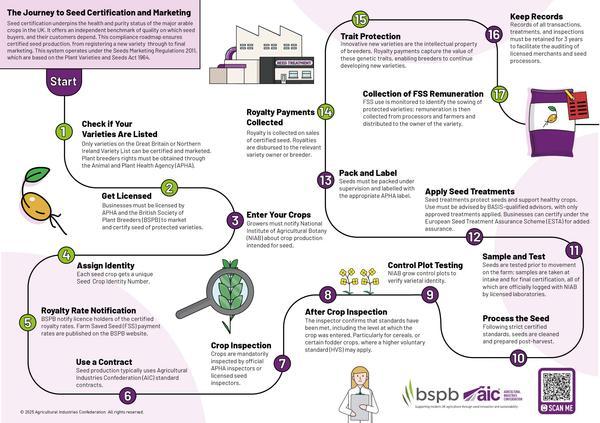
For UK growers of wheat, barley, oats and other combinable crops, certified seed is not just a product in a bag. It is the visible end point of years of breeding, testing, multiplication, certification, and quality assurance. It provides confidence in varietal identity, purity, germination, and traceability, with the UK certification system designed to ensure seed meets prescribed standards before it is marketed.
New Challenges for UK Arable and Forage Production
The challenges facing UK arable production are changing quickly. Weather volatility is becoming a commercial reality, not a theoretical risk. Recent crop development updates highlighted how dry spring conditions left many cereal crops short of moisture, reducing tillering, shortening crops and causing early senescence in some areas, while later heat also affected grain fill and grain size. At the same time, disease and pest pressures continue to shift, with widespread symptoms of barley yellow dwarf virus (BYDV) reported in oats, confirmation of wheat dwarf virus in several regions, and more targeted fungicide use because of rising input costs.
In this context, plant breeding should not be seen as a “nice to have”. It is one of the most important tools available to keep UK farming viable and profitable.
Why Plant Breeding Matters More Than Ever
Breeding cannot solve every problem on its own, but it can help deliver crops with stronger disease resistance, better standing power, improved market quality, more efficient resource use and greater resilience to stress. Work on varieties and genetics recognises the importance of sustained investment in research and trials because plant breeding takes many years, and because new varieties need to meet both farmers’ agronomic needs and the requirements of diverse grain markets. Information on yield, quality, disease resistance and agronomic traits to support variety selection across cereals, oilseeds and forage is crucial.
The UK does not need just “new varieties”. It needs varieties that work for UK conditions, UK soils, UK disease pressures, UK markets and UK policy direction.
As agricultural policy continues to move towards lower environmental impact, reduced reliance on chemical intervention and more efficient use of inputs, genetics will become even more important. If growers are expected to manage crops with fewer active ingredients, reduce emissions, protect water and biodiversity, and still produce consistent food, feed, and raw material for the supply chain, then they need the best possible genetic starting point.
The Role of Certified Seed
Certified seed plays a direct role in that system. It gives growers access to professionally produced seed of known identity and quality, while also supporting the royalty mechanism that funds future breeding. Royalties collected from certified and farm-saved seed help safeguard the future of crop production by supporting breeding programmes that develop improved varieties suited to UK growing conditions. Government guidance also makes clear that farm-saved seed payments support continued investment in improved varieties bred for UK conditions.
This is not about criticising farm-saved seed.
Farm-saved seed is a legitimate and important part of the UK seed system when used correctly, declared properly and managed responsibly. But certified seed must remain a valued cornerstone of the system because it underpins quality, traceability, multiplication routes, and the commercial return breeders need to keep investing.
Why Future Investment Matters
The concern is simple: if the UK does not continue to support its domestic breeding and certified seed sector, the incentive to breed for this market weakens. Breeding programmes are long-term, costly and commercially demanding. They rely on confidence that investment will be recognised and rewarded. Without that confidence, there is a real risk that the UK becomes less attractive as a focus for breeding investment.
If that happens, growers could find themselves with less influence over the varieties available to them. There is a risk that, over time, the UK becomes increasingly dependent on varieties bred primarily for other regions, with decisions on variety priorities, availability and commercial terms made outside the UK
That would be a poor outcome for growers, processors, and the wider supply chain.
It could mean fewer varieties tailored to UK conditions. It could mean less ability to respond quickly to emerging disease pressures. It could mean reduced influence over the traits that matter to our market, whether that is milling quality, malting performance, feed value, disease resistance, drought tolerance or input efficiency. It could also mean an increasing share of value and intellectual property sitting outside the UK, with growers paying for innovation while having less influence over where that innovation is directed.
At a time when food security, climate resilience and sustainable production are all rising up the political agenda, that would be short-sighted.
Precision Breeding and Future Opportunity
There is also a significant opportunity in front of us.
The Genetic Technology (Precision Breeding) Act 2023 has created a framework for precision-bred organisms in England, and guidance from the Department for Environment, Food and Rural Affairs (Defra) now covers the release and marketing of precision-bred plants. Defra’s precision breeding register shows that precision-bred plant notices are already being received and published. If implemented carefully and proportionately, precision breeding could sit alongside conventional breeding as another tool to help deliver crop improvements more efficiently.
But technology alone will not deliver resilience. It needs a functioning seed system around it. It needs breeders, seed merchants, processors, trial networks, certification bodies, growers and end users working together. It needs fair reward for innovation. It needs confidence from farmers that the seed they buy is reliable and fit for purpose. Above all, it needs a policy environment that recognises seed as a strategic part of food security, not just another input cost.
Maintaining Choice for UK Growers
Certified seed stands for choice and maintaining a UK-relevant pipeline of varieties for UK growers. It is about supporting plant breeding as a practical answer to some of the most difficult questions facing agriculture: how do we produce more consistently in extreme seasons, with fewer tools, higher expectations and tighter margins?
The UK has a strong history of crop science, plant breeding, seed certification and variety testing. That should not be taken for granted. Once capacity is lost, it is not easily rebuilt.
Investing in the Future of UK Crop Production
If we want UK farmers to remain competitive, resilient and able to meet future policy and market demands, we must value the system that starts it all. That means recognising certified seed as an investment in confidence, performance and future innovation. It means supporting fair royalty collection, backing UK-focused breeding, and ensuring growers continue to have access to varieties developed with their conditions, markets and future in mind.
The seed sector is not just supplying today’s crop. It is helping shape the crops we will rely on tomorrow.
Related Resources
Frequently Asked Questions (FAQs) About Certified Seed
For Agricultural Industries Confederation (AIC) Members and UK growers, certified seed is a practical way to build confidence and consistency during establishment, backed by transparent, independently verified standards.
What is certified cereal seed?
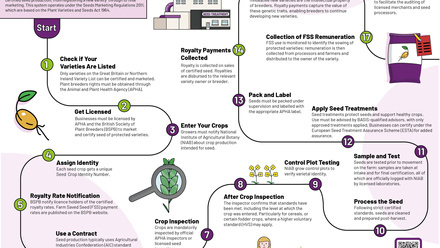
Certified seed is seed that has been independently verified against clear standards for varietal identity, purity, germination and quality. For UK growers, it provides confidence that what is on the label is what is being drilled, supporting consistency and reliability during crop establishment.
How does certification improve transparency and traceability?
Independent certification provides full traceability through the supply chain and clear, auditable standards. This transparency gives growers confidence in what they are buying, while also supporting continued investment in UK plant breeding and varietal development.
How are seed treatments applied and checked?
Where seed is treated, oversight schemes such as the European Seed Treatment Assurance (ESTA) scheme help ensure treatments are applied professionally and evenly. Application processes are audited, including checks on coverage and dose, to support consistent performance and responsible use.
What are the agronomic benefits of certified seed?
Certified seed supports more consistent, true‑to‑type varietal performance and reduces the risk of seed‑borne disease issues early in the season. Laboratory testing for germination and vigour helps deliver more uniform establishment, improving yield and crop quality potential and reducing the risk of downgrades linked to uneven crops.
Does certified seed support sustainable farming?
Yes. More even establishment allows crops to make more efficient use of nutrients, water and light, reducing avoidable failures and the need for later “rescue” sprays. These efficiency gains support both economic and environmental sustainability at farm level.Author

Rose Riby
Rose Riby is Head of Combinable Crops and Seed. Having worked across these sectors for many years, she has a depth and breadth of experience in roles in grain trading, plant breeding and knowledge exchange at AHDB.