
Meet Kerry: A Career in IT Support and Digital Systems
Discover Kerry’s career journey into data administration, from customer service and account management to managing training, trade assurance, data quality and invoicing. Find out what her role involves, the technical and people skills she uses and her advice for developing confidence with Excel, Copilot and Power BI.
What does a normal day look like in your job?
I am responsible for managing the Feed Advisor Register (FAR), including processing new application forms, enrolling students onto the appropriate training modules, and monitoring their progress throughout their courses. As part of this role, I produce and distribute monthly progress reports to our member companies, providing updates on their learners' completion status and development.
I also manage the AIC Trade Assurance schemes, which involves setting up new schemes, maintaining and updating existing schemes, and resolving any user access or system-related issues. A significant part of my role focuses on monitoring data quality, ensuring records are accurate and up to date.
More recently, I have taken responsibility for invoicing all FAR members and handling account-related queries. This requires strong attention to detail, effective communication skills, and the ability to manage financial information accurately.
How did you get into this role?
I started in a Customer Services role, which can be challenging at times, but it is an excellent way to develop your communication skills and gain experience liaising with external customers, whether by phone or email.
I then progressed into Account Management, where I was responsible for managing a portfolio of customers, building relationships, and helping to grow revenue for the business. This was a great opportunity to develop rapport-building skills and learn how to establish strong working relationships, which are valuable in any role.
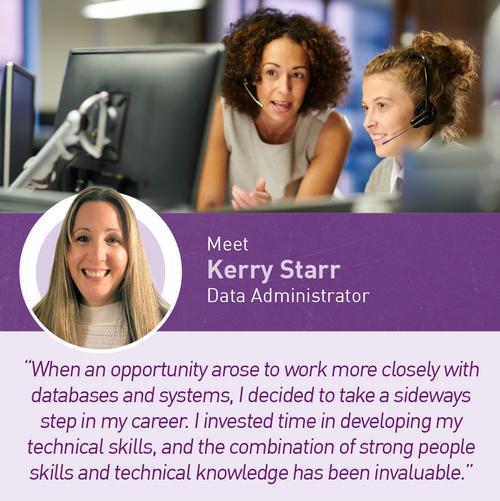
When an opportunity arose to work more closely with the databases and systems I had been using over the years, I decided to take a sideways step in my career. To support this transition, I invested time in developing my technical skills by completing training courses, particularly in Excel. These courses range from foundation to advanced level, allowing you to build your knowledge gradually. Many excellent learning resources and courses are available free of charge online.
Looking back, each stage of my career helped me develop different skills, and the combination of strong people skills and technical knowledge.
What skills or qualities matter most in your job?
One of the unique things about this role is how much flexibility there is to approach it differently according to peoples’ own strengths. For me, strong communication and relationship-building skills are essential. A huge part of the job is getting to know growers, understanding their needs, and building genuine, trusting relationships. It’s about being interested in people and figuring out how best to support them.
Alongside that, technical knowledge is important, although much of it can be learned on the job. I’ve developed my understanding of areas like weed control, insecticides and agricultural legislation by shadowing colleagues and learning from others across the business.
It’s really a balance between people skills and technical expertise. Sometimes, you might be the only person a grower sees that day, so having the time to talk and support them is really important - especially given the challenges in agriculture. I’m also a mental health first aider, which helps me recognise when someone might need additional support, and guide them to the right resources.
What do you enjoy most about your role?
I enjoy the problem-solving aspect of my role and taking a methodical approach to working through challenges and resolving issues.
I love tackling complex problems and enjoy the sense of achievement that comes from finding effective solutions.
What advice would you give someone thinking about this career?
I would recommend joining as many of the major platforms as possible so you can gain hands-on experience and practise regularly.
Complete as many Excel training courses as you can, and make use of Copilot, particularly for Excel-related tasks. If possible, also undertake Power BI training to expand your data analysis and reporting skills.