
Environmental Improvement Plan (EIP) 2025
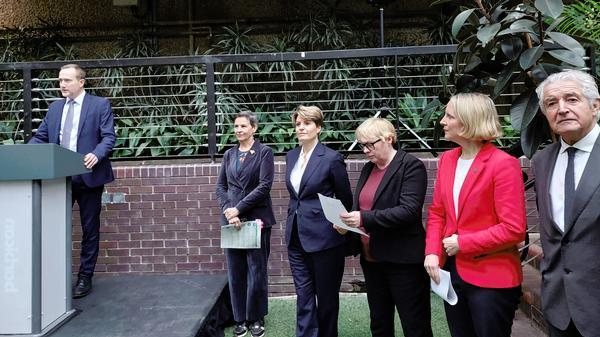
AIC attended the launch event for the Government’s revised Environmental Improvement Plan 2025 (EIP25) earlier this week. Published by the Department for Environment, Food & Rural Affairs (Defra) on 1 December 2025, the plan sets out a five-year framework to improve England’s natural environment. It builds on statutory targets under the Environment Act 2021 and includes specific delivery plans to ensure progress and accountability.
The EIP is a long-term delivery plan comprising five interrelated chapters that set out ten goals, commitments, and actions. The ten goals for the natural environment cover restored nature, air, water, chemicals and pesticides, waste, resources, climate change, environmental hazards, biosecurity, and access to nature.
Targets and commitments to achieve these long-term goals are detailed, with each commitment linked to a key metric and contributing to the EIP Monitoring Plan. The 91 commitments outlined in the plan will be delivered through actions taken across government and by stakeholders, including farmers and land managers. Examples include reducing nutrient runoff from farms in priority catchments, improving soil structure and carbon storage, creating and protecting 30% of land for wildlife-rich habitat by 2030, and agriculture’s role in achieving net zero by 2050. The Sustainable Farming Incentive and Landscape Recovery schemes are expected to play a major role in delivering biodiversity, water quality, and nature recovery.
Several original EIP interim targets to be met by 2028 have been strengthened, although most have had their timeframe extended to 2030. Updated interim targets that will directly affect agriculture include:
-
By 2030, doubling the number of farms providing sufficient year-round resources for farm wildlife compared with 2025.
-
Reducing total nitrogen, phosphorus, and sediment pollution from agriculture to the water environment by at least 12% by December 2030 compared with a 2018 baseline.
-
Reducing total nitrogen, phosphorus, and sediment pollution from agriculture to the water environment by at least 18% in catchments containing protected sites in unfavourable condition due to nutrient pollution by December 2030.
AIC supports the overall direction and ambition of EIP25. However, there is a need to understand the detail of implementation and how these new targets compare with those set out in the previous Environmental Improvement Plan. More detailed analysis will be provided to Members in due course.