
Blog: Why FIAS Was Developed and Why It Matters
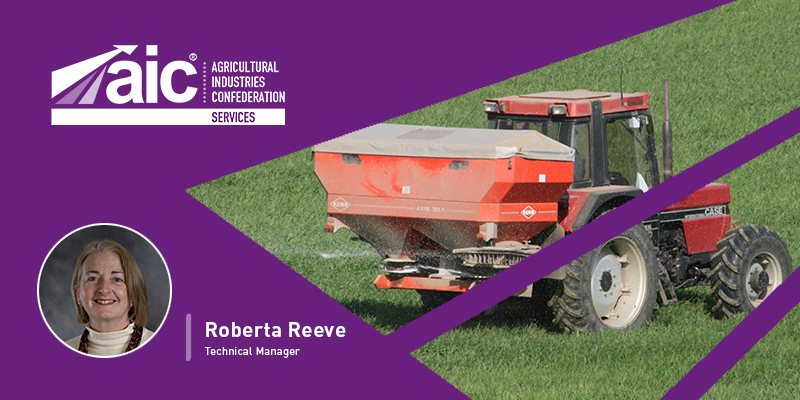
From managing inherent safety and security risks to responding to Government concerns around misuse, Agricultural Industries Confederation's (AIC) Technical Manager Roberta Reeve explains why FIAS was developed, ensuring fertilisers continue to be supplied responsibly across the UK.
Fertilisers play a vital role in UK food production. They help farmers grow crops efficiently, sustainably and at scale, supporting both food security and farm productivity. However, alongside these benefits sits a long-recognised reality: some fertiliser products can pose serious risks if they are misused, mishandled or fall into the wrong hands.
The Fertiliser Industry Assurance Scheme (FIAS) was developed to address those risks, protect the public, and demonstrate that the fertiliser industry takes its responsibilities seriously.
Learning from global incidents
Over several decades, a number of serious incidents around the world have involved fertilisers. These have included industrial accidents, such as fires and explosions linked to poor storage or handling, as well as deliberate misuse, often associated with weak controls or poor oversight.
These events highlighted an important lesson: while fertilisers are legitimate and essential agricultural products, they can cause significant harm if access to them is not properly managed. Each incident reinforced the need for stronger, more consistent safeguards across the fertiliser supply chain.
Government consideration of options (2004-05)
Between 2004 and 2005, in response to concerns around the potential misuse of fertilisers, the UK Government formally considered a range of options to reduce unlawful fertiliser use.
Several approaches were explored:
-
A ban on ammonium nitrate, the main source of nitrogen in many commercial fertilisers. This option was rejected because it would have removed a critical agricultural input and placed UK agriculture at a competitive disadvantage.
-
New legislation governing fertiliser supply and use. This was considered overly burdensome and costly for both Government and industry.
-
Industry self-regulation, delivered through a formal assurance Scheme. This approach was identified as the most effective and proportionate solution, providing strong controls, independent auditing and a recognised due-diligence defence.
Self-regulation through assurance was chosen as the lowest-cost and most effective way to manage risk while maintaining agricultural productivity.
The creation of FIAS
Following this decision, AIC Services was asked to develop and manage an industry assurance Scheme on behalf of the fertiliser sector. This work led to the creation of what became the Fertiliser Industry Assurance Scheme (FIAS).
To support its development, two groups were established:
-
An Industry Working Group, responsible for drafting the FIAS Standard
-
A Steering Group, made up of key stakeholders and industry representatives, to guide and oversee the Scheme’s development
From the outset, the aim was to create a Scheme that would be robust, practical and applicable across the entire fertiliser supply chain.
By 2005, FIAS gained UKAS accreditation and Kiwa is appointed as its certification body and auditor training began. In 2006, FIAS is officially launched with its Standard agreed and issues to Scheme Participants.
Strengthening and evolving the Scheme
Since its launch, FIAS has continued to evolve in response to emerging risks, changing practices and regulatory expectations.
Key developments include:
-
Revisions to the FIAS Standard to ensure it remains current and effective
-
Widespread industry adoption, with the vast majority of the fertiliser supply chain becoming FIAS-certified
-
The publication of AIC’s Guide on the Safe Handling, Storage and Transport of Ammonium Nitrate, supporting best practice and helping to reduce regulatory inspection burdens through Earned Recognition with the Department for Transport.
-
Continued investment in Scheme development, including improved auditing processes and digital systems to support assurance
Over time, these developments have strengthened confidence in the Scheme and reinforced its role in managing fertiliser safety and security.
A proactive, industry-led approach
FIAS exists because experience has shown what can happen when fertilisers are poorly controlled, and because Government and industry agreed that a collaborative, assurance-based approach was the most effective response.
Today, continued investment in the FIAS Standard and independent auditing helps ensure fertilisers supplied in the UK are safe, secure and fully traceable. The Scheme stands as a clear example of how industry-led assurance can protect people, support responsible businesses and maintain trust in a sector that underpins food production.