
Meet Robert Hotchkiss-Wait: A Career in Engineering
Discover Robert’s career journey at AB Agri, from studying economics and working as an analyst to managing major engineering projects across feed mills. Find out how he turns operational problems into practical solutions, the skills he relies on and his advice for entering engineering without a traditional engineering background.
What does a normal day look like in your job?
My days are incredibly varied - I essentially find big, real world problems and design out a way to solve them. One day, I might be looking at a factory to figure out why a process is slow and designing a way to fix it. Another day, I might be on-site, making sure building contractors are working safely. I also spend time negotiating contracts and planning long-term strategies, like figuring out how our factories should use data and technology over the next ten years. It’s a mix of problem-solving at a desk and getting out into the factories to oversee the actual work.
How did you get into this role?
I had no idea what I wanted to do when I was younger!
I actually started by studying economics because it felt applicable to lots of jobs, I then did a placement year with the Government as an analyst, but I soon realised I wanted a more 'hands-on' career where I could see physical results.
I joined a graduate programme at an agricultural company which makes feed for animals and tried out a few different roles.
I found my real passion when I planned the costs and design for a brand-new yeast factory.
That led to managing the build of a completely novel algae production facility for animal feed.
After doing that for two years, I stepped into my current role, managing large-scale engineering projects across nine different feed mills all over the UK.
What skills or qualities matter most in your job?
Communication and attention to detail are massive, but above all, it's the ability to listen and learn from the people around you.
You need to understand what everyone - from the factory floor workers to the company directors - actually needs.
Anyone can buy a piece of heavy equipment and just drop it into a factory, but installing it safely, in a way that actually makes people's jobs easier and helps the business grow, takes a lot of careful thought, teamwork, and listening.
What do you enjoy most about your role?
I love the variety, and I love feeling like I am making a tangible difference; for example, I recently managed the installation of a completely new control system at one of our mills, this basically is a factory's brain, it tells valves when to open and close, weighers when to tare or empty, and mixers, grinders, and presses what speed to run at.
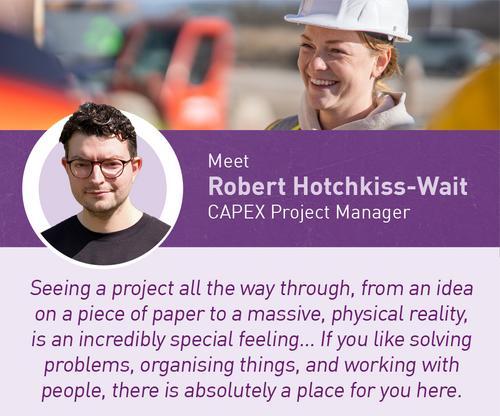
Seeing a project all the way through, from an idea on a piece of paper to a massive, physical reality, is an incredibly special feeling - it's a highly rewarding job if you like splitting your time between an office desk and being out on a busy factory site.
What advice would you give someone thinking about this career?
Don't be put off if you aren't formally trained in engineering or mechanics - this industry truly is for everyone; engineering touches everything we do, and it needs people with all sorts of backgrounds.
In a business that makes physical products, someone who can act as a bridge - speaking the 'language of business' as well as the practical 'language of the factory' - becomes incredibly valuable very quickly.
If you like solving problems, organising things, and working with people, there is absolutely a place for you here.